Art in times of stupidity. Stiegler’s politicization of art in the hyperindustrial age
Abstract
According to Stiegler, contemporary toxic technologies have led to aesthetic disindividuation and aesthetic ‘conditioning’, substituting aesthetic ‘experience’ and amounting to its exploitation. Stiegler, however, also contends that the loss of individuation can be restored because of the pharmacological nature of technology. Moreover, he believes in the possibility of a “renaissance of the symbolic” in which art, artists and amateurs play a role. First, Stiegler considers the repeated encounter with works of art as a cure for symbolic misery and as an opportunity for individuation. Second, the role art and artists can play is part of the larger process of ‘adoption’ of contemporary forms of technology. More in particular, Stiegler points out that digital media occasion the restoration of the intimate connection between artistic production and aesthetic reception. Even though Stiegler is well aware that symbolic misery will not be lifted on the basis of artistic activity alone, he may be too optimistic about art’s possibility for deproletarianization and for adopting contemporary technologies.
- Keywords: Stiegler, art, aesthetics, symbolic misery, amateur
Details
Source: Azimuth. Philosophical Coordinates in Modern and Contemporary Age (Special issue: Actual Philosophy. Critical Thinking at the Crossroads of Technology, Aesthetics and Politics, and the History of Culture).(Eds. Cristina Basili, Federica Buongiorno, Marco Carassai, Simone Guidi, Antonio Lucci, Igor Pelgreffi, Libera Pisano, Alberto Romele), 11(21), pp. 101-114.
Author(s): Helena De Preester
Year of publication: 2023
Visual art and the reconstruction of the artist’s gesture: phenomenological arguments for an alternative mirror theory
Abstract
This contribution supports the idea that research on the beholder’s response to visual works of art benefits from recent suggestions from cognitive science about the role of embodied motor processes in experience. However, it argues that the current hypothesis of the beholder’s motor engagement that follows from the mirror neuron theory suffers from an inadequate view on the production of visual art, in particular with regard to the nature of the gestures involved. It therefore offers an account of the perception of visual works of art in which the role of embodied motor processes is central, but avoids a too “intentionalist” view on the artist’s gestures.
- Keywords: Visual Art; Embodied Cognition; Mirror Neurons; Phenomenology; Gesture
Details
Source: pp. 139-153 in The New Yearbook for Phenomenology and Phenomenological Philosophy(Ed. Vassiliou, F.). Abingdon-on-Thames: Routledge.
Author(s): Helena De Preester
Year of publication: 2021
Drawing is a thinking machine – A digital Vasco da Gama
Context
Peter Beyls is a Belgian pioneering interdisciplinary artist who has been exploring computer programming for nearly four decades. His work extends into the visual arts, music and hybrid experimental formats.
In light of the publication of a monograph by MER Paperkunsthalle, iMAL organises the first major survey exhibition of Peter Beyls in Belgium featuring a significant selection of works from 1974 until today.
A comprehensive selection of machine drawings is shown reflecting the wide range of algorithmic approaches explored by the artist. Initial experiments focus on uncertainty and conditional randomness, typically organised as grid structures. Further grid-based work employs cellular automata; a kind of virtual machines growing complexity from simple beginnings. Inspired on Chomsky’s writings, much work explores linguistic principles. At some point, abstract generative thinking gave way to the notion on ‘creative intelligence’ – the delegation of aspects of human creativity to machines. This work is based on principles of the discipline of artificial intelligence.
A major transition gradually evolved starting in the late 1980’s; a conceptual swing from knowledge-based systems to self-organisation. The latter approach is characterized as speculative, simple components interact locally to give rise to emergent overall complexity. Since the genesis of intricate structures is captured in a series of drawings, the notion of time is implicit.
The exhibition will thus provide an overview of the various computational paradigms implemented by the artist. In addition, a wide range of media and presentation formats are employed such as over 70 machine drawings and unique photographic prints. Four audiovisual installations provide a dynamic interface between the onlooker and the virtual world inside the computer or the data of Internet. Robot drawings produced in 2014 will receive their first public presentation.
The show is organised in the context of a monograph documenting the artist’s extended oeuvre, published by MER (www.merpaperkunsthalle.org). Six international scholars (Sahra Kunz, Frieder Nake, Luc Steels, Helena De Preester, Grant Taylor and Joel Chadabe) contributed a chapter, aiming to create a critical framework from their respective, private intellectual perspective.
The Monograph (English) will be on sales at iMAL during the whole exhibition.
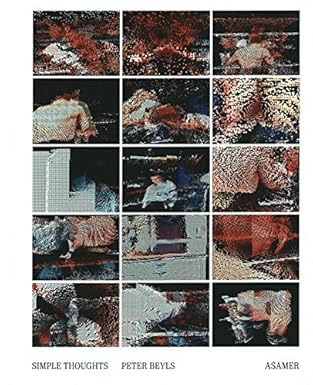
See https://legacy.imal.org/en/exhibition/peter-beyls-retrospective
More on Peter Beyls: https://www.peterbeyls.net/
- Keywords: Peter Beyls, computer art, robot drawings, computer programming, cellular automata, self-organisation
Details
Source: pp. 161-185 in Simple Thoughts – Peter Beyls (ed. P. Beyls). Gent: Asamer
Author(s): Helena De Preester
Year of publication: 2014
Sensitivity to Differences in the Motor Origin of Drawings: From Human to Robot
Abstract
This study explores the idea that an observer is sensitive to differences in the static traces of drawings that are due to differences in motor origin. In particular, our aim was to test if an observer is able to discriminate between drawings made by a robot and by a human in the case where the drawings contain salient kinematic cues for discrimination and in the case where the drawings only contain more subtle kinematic cues. We hypothesized that participants would be able to correctly attribute the drawing to a human or a robot origin when salient kinematic cues are present. In addition, our study shows that observers are also able to detect the producer behind the drawings in the absence of these salient kinematic cues. The design was such that in the absence of salient kinematic cues, the drawings are visually very similar, i.e. only differing in subtle kinematic differences. Observers thus had to rely on these subtle kinematic differences in the line trajectories between drawings. However, not only motor origin (human versus robot) but also motor style (natural versus mechanic) plays a role in attributing a drawing to the correct producer, because participants scored less high when the human hand draws in a relatively mechanical way. Overall, this study suggests that observers are sensitive to subtle kinematic differences between visually similar marks in drawings that have a different motor origin. We offer some possible interpretations inspired by the idea of “motor resonance”.
- Keywords: drawing, human hand, robot drawing, kinematics, gesture, motor, motor resonance, movement, static traces
- Open access
Details
Source: PLoS ONE 9(7): e102318. https://doi.org/10.1371/journal.pone.0102318
Author(s): Helena De Preester, Manos Tsakiris
Year of publication: 2014
Investing in the Act of Painting: Ilse D’Hollander and the Question of Painting
Context
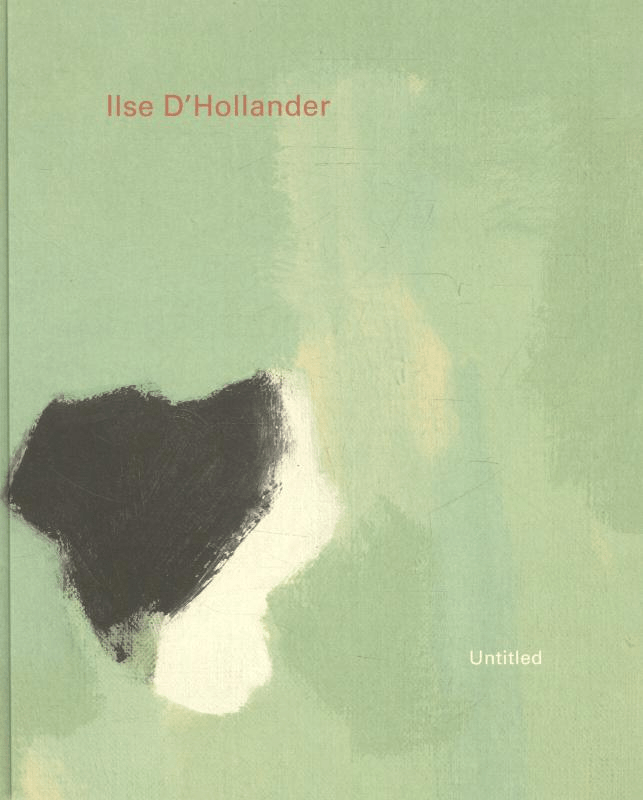
The paintings of Ilse D’Hollander (Sint-Niklaas, 1968-1997) result from a personal search for the medium of painting. Via meticulous observation of her immediate environment, Ilse D’Hollander created compositions of colored surfaces and lines, vibrating forms and transparent overpainting. Visual elements from the landscape, such as a branch, house, or road, are transformed into more abstract visual language that vacillates between the recognizable, suggestive, determined and more poetic.
Some of her works may be linked to painters like Paul Cezanne, René Daniels or Raoul De Keyser. In only a brief period, between 1989 and 1997, Ilse D’Hollander created an extensive oeuvre of paintings and drawings.
With texts by Eva Wittocx, Tanguy Eeckhout, Helena De Preester and David Nash.
- Keywords: Ilse D’Hollander, painting, act of painting, abstract, sensory, body, Merleau-Ponty
Details
Source: Ilse D’Hollander: Untitled (artist monograph), pp. 59-64 (Dutch), pp. 109-114 (English). Publisher: The Estate Ilse D’Hollander and Hannibal Publishing, 256 pp.
Author(s): Helena De Preester
Year of publication: 2013
Not A Day Without A Line. Understanding Artists’ Writings
Description
Throughout the 20th and in the beginning of the 21st century, many artists take up a double role as both art practitioner and writer. In recent years, scholars and the general public have become increasingly interested in artists’ writings. A growing number of collected writings by many major 20th and 21st century artists is now being published in carefully edited publications. What is much less present, however, is a focus on how to understand these artists’ writings. That is the aim of the present volume, which contains contributions by artists, academics and curators who undertake a reflection on artists’ writings from the 20th and the 21st centuries. Emphasizing the visual arts, including performance art, Not a day Without a Line focuses on artists’ writings that do not resemble the more explanatory kinds of writings by art critics, art philosophers or art historians, but which challenge our understanding of them as a text or an instance of reflection. The intricate relations between writing and art practice, between text and image, and between writing and the life of the artist, are important factors in what could be called the artist’s methodological promiscuity in writing.
- Keywords: artists’ writings, PhD in the arts, body of knowledge, disciplinarity
- Table of Contents
Details
Editor: Helena De Preester
Contributors: see Table of Contents
Publisher: Gent: Academia Press
Year of publication: 2013
Living Lines: Can We Discriminate Between Traces of Movement by Animate and Non-Animate Agents?
Abstract
This chapter examines the viewer’s sensitivity to the movements behind a drawn image. The images discussed are made by two different kinds of agents: animate and non-animate, and we examine if and how the viewer is able to discriminate the producer behind the drawings. We first present a number of recent theoretical insights and empirical results as to how observers perceive movements produced by animate and non- animate agents, and how they are able to correctly attribute drawn lines to the agent that produced it. We next present the results of a pilot study that suggests that participants are indeed able to discriminate between similar-looking drawings produced by humans and by a robot. The notion of motor resonance guides our explanation.
- Keywords: drawing, human hand, robot drawing, mirror neurons, gesture, motor, motor resonance, movement, static traces
Details
Source: Images of Animate Movement. Representations of Life/Bilder animierter Bewegung. Darstellungen von Leben, pp. 181-196.
Author(s): Helena De Preester, Manos Tsakiris
Editors: S. Leyssen, P. Rathgeber
Publisher: München: Wilhelm Fink Verlag
Year of publication: 2013
Moving Imagination – Explorations of Gesture and Inner Movement in the Arts
Description
This volume brings together contributions by philosophers, art historians and artists who discuss, interpret and analyse the moving and gesturing body in the arts. Broadly inspired by phenomenology, and taking into account insights from cognitive science, the contribution of the motor body in watching a film, attending a dance or theatre performance, looking at paintings or drawings, and listening to music is explored from a diversity of perspectives. This volume is intended for both the specialist and non-specialist in the fields of art, philosophy and cognitive science, and testifies to the burgeoning interest for the moving and gesturing body, not only in the creation but also in the perception of works of art. Imagination is tied to our capacity to silently resonate with the way a work of art has been or is created.
- Keywords: cognitive science, music, theatre studies, art, gesture, embodied cognition, embodiment, phenomenology, body, imagination, listening (music), artistic creation, art and perception, psychology of perception in arts, moving body
- Table of Contents
Details
Editor: Helena De Preester
Contributors: see Table of Contents
Publisher: John Benjamins Publishing Company
Year of publication: 2013
The Sensory Component of Imagination: the Motor Theory of Imagination as a Present-Day Solution to Sartre’s Critique
Abstract
Several recent accounts claim that imagination is a matter of simulating perceptual acts. Although this point of view receives support from both phenomenological and empirical research, I claim that Jean-Paul Sartre’s worry formulated in L’imagination (1936) still holds. For a number of reasons, Sartre heavily criticizes theories in which the sensory material of imaginative acts consists in reviving sensory impressions. Based on empirical and philosophical insights, this article explains how simulation theories of imagination can overcome Sartre’s critique by paying attention to the motor dimension of imagination. Intending to clarify the status of the sensory in imagination, a motor theory of imagination is presented in which the sensory component of imagination is interpreted in terms of anticipated sensory consequences of preparation for motor action.
- Keywords: anticipation; cognitive science; hylè; imagination; motor; phenomenology; Sartre; sensory; simulation
Details
Source: Philosophical Psychology 25(4), pp. 503-520
DOI: 10.1080/09515089.2011.622362
Author(s): Helena De Preester
Year of publication: 2012
The Role of the Artist’s Gesture in the Perception of Art and Artistic Style
Abstract
The perception of art is a complex and multi-layered phenomenon. One obvious aspect in perceiving and appreciating a work of art is the recognition of its representational content, either figurative or non-figurative. A second and no less important aspect is the assessment of its graphic or plastic qualities. Assessing these qualities is part of our understanding of the process in which the work has been produced. Many artists testify that this process is not primarily an activity carried out by the mind, but rather “[…] a bodily activity, one that is an expression of the lived-body’s way of being in the world.” (Wentworth, 2004: 15) The perception and appreciation of works of art therefore involves the understanding of its coming into being on the basis of the artist’s gestures. In this contribution, these two related ideas are elaborated on the basis of a number of phenomenological insights. First, the Husserlian idea that in the perception of cultural objects their coming into being is appresented, and second the idea that in the art of drawing, this is a matter of appresentation of the draftsman bodily gestures.
- Keywords: art; Husserl; appresentation; empathy; drawing; gesture
Details
Source: pp 15-19 in Art and Science, vol. IX, Proceedings of a Special Focus Symposium on Art and Science, The 23rd International conference on systems research, informatics and cybernetics (eds. G.E. Lasker, H. Schinzel, K. Boullart, H. De Preester, J. Galle), Tecumseh, Canada: The International Institute for Advanced Studies in Systems Research and Cybernetics.
Author(s): Helena De Preester
Year of publication: 2011
Transcendentalism and Original Beginnings
Abstract
In “Sublime historical experience” (2005), Frank Ankersmit argues that the past originates from an experience of rupture. Such an experience of rupture separates the present from the past, and, at the same time, means the beginning of an effort to overcome the separation. Moreover, the experience is precognitive since it precedes (the possibility of) historical knowledge. As such, it is a condition of possibility for history. Ankersmit resists post-modern thinking about history, considered as too relativizing from the perspective of current philosophy of history. In his view, the focus on text and context, but also the emphasis on categories in transcendental thinking, result in a neglect of experience. Experience should be given its due, also in philosophy of history. Starting from the above challenge, the “original beginnings”, which Husserl posits as meaning-origins of a particular history in “The Origin of Geometry” (cf. appendix 6 to “The Crisis of European Sciences and Transcendental Phenomenology”, 1970) are questioned from a transcendental perspective. More in particular, it will be investigated if these meaning-origins are to be grasped as structural and nachträglich, in a Derridean style, or if they are to be considered as founding moments of experience, probably in a more Merleau-Pontian style. At stake is here the transcendental status of the first acquisition. Is the point from which a historical demarcation is being made, and thus also the meaning-origin itself, a matter of interpretation after the facts or is it the witness of a supposedly genuine experience? The differences between these two options are both subtle and crucial for transcendental thinking today. In the conclusions, we point to the importance of thinking the possibility of history in structural terms, and to different possible appreciations of the spiritual products of culture and more specifically, of works of art.
- Keywords: Ankersmit; history; experience; transcendental; Merleau-Ponty; Husserl; structure; work of art
Details
Source: pp. 307-322 in Tymieniecka, A.-T. (eds) Transcendentalism Overturned. Analecta Husserliana, vol 108. Springer, Dordrecht. https://doi.org/10.1007/978-94-007-0624-8_22
Author(s): Helena De Preester & Gertrudis Van de Vijver
Year of publication: 2011
“De Doublure”: over dubbel en stand-in in het oeuvre van Philip Huyghe
Abstract
This joint contribution by a philosopher and an artist focuses on a number of concepts wavering at the horizon of the artist’s studio work and implied in the title of his most recent work ‘De Doublure’. The word ‘doublure’, both in French and in Dutch, refers to different meanings such as ‘doubling’, ‘duplication’, ‘understudy’ and ‘lining’. Based on a reading of Michel Foucault’s early work Death and the Labyrinth – The World of Raymond Roussel (1963), we examine how doublings, duplications and understudies act in widely diverging media like Raymond Roussel’s poetry and Philip Huyghe’s own visual work. On the one hand, we present some thematic resemblances related to carnival, masks and understudies. On the other hand, we explain how the production of doublings and duplications that differ minimally from their original is also a procedure creating new meanings.
- Keywords: Philip Huyghe; doublure; Foucault; Raymond Roussel; carnival; understudies; duplications
Details
Source: pp. 245-259 in Invitation au Voyage. Kunst als voertuig voor mentale reizen.
Author(s): Helena De Preester, Philip Huyghe
Editors: C. Van Damme, M. Van Eeckhaut, B. Scherlippens
Publisher: Gent: Leerstoel Karel Geirlandt/UGent & Academia Press.
Year of publication: 2010
 Contemporary Emotions in Art, Technology and Politics