Art in times of stupidity. Stiegler’s politicization of art in the hyperindustrial age
Abstract
According to Stiegler, contemporary toxic technologies have led to aesthetic disindividuation and aesthetic ‘conditioning’, substituting aesthetic ‘experience’ and amounting to its exploitation. Stiegler, however, also contends that the loss of individuation can be restored because of the pharmacological nature of technology. Moreover, he believes in the possibility of a “renaissance of the symbolic” in which art, artists and amateurs play a role. First, Stiegler considers the repeated encounter with works of art as a cure for symbolic misery and as an opportunity for individuation. Second, the role art and artists can play is part of the larger process of ‘adoption’ of contemporary forms of technology. More in particular, Stiegler points out that digital media occasion the restoration of the intimate connection between artistic production and aesthetic reception. Even though Stiegler is well aware that symbolic misery will not be lifted on the basis of artistic activity alone, he may be too optimistic about art’s possibility for deproletarianization and for adopting contemporary technologies.
- Keywords: Stiegler, art, aesthetics, symbolic misery, amateur
Details
Source: Azimuth. Philosophical Coordinates in Modern and Contemporary Age (Special issue: Actual Philosophy. Critical Thinking at the Crossroads of Technology, Aesthetics and Politics, and the History of Culture).(Eds. Cristina Basili, Federica Buongiorno, Marco Carassai, Simone Guidi, Antonio Lucci, Igor Pelgreffi, Libera Pisano, Alberto Romele), 11(21), pp. 101-114.
Author(s): Helena De Preester
Year of publication: 2023
Life is what you fill your attention with – the war for attention and the role of digital technology in the work of Bernard Stiegler
Abstract
This contribution focuses on the topic of attention and sets forth the main points of Bernard Stiegler’s analysis of the interplay between capitalist consumer society, the destruction of attention and the consequences for individual and collective life. We look at how current digital technologies in service of the needs of the market are a major factor in the destruction of attention and discuss two counterforces that do not destroy but form attention: education and meditation. If life is what you fill your attention
with, then focusing or directing attention is one of the most valuable abilities for knowing how to live. Instead of letting our attention be hijacked by the market and the economic needs of neoliberal
capitalism, being in charge of what happens to our attention may be a basic right that needs protection given the current conditions of the attention economy.
- Keywords: attention, Bernard Stiegler, (digital) technology, education, meditation, neoliberal capitalism
- Open acces
Details
Source: Phenomenology and Mind 20, 102-116.
Author(s): Helena De Preester
Year of publication: 2021
Subjectivity and transcendental illusions in the Anthropocene
Abstract
This contribution focuses on one member in particular of the anthropocenic triad Earth – technology – humankind, namely the current form of human subjectivity that characterizes humankind in the Anthropocene. Because knowledge, desire and behavior are always embedded in a particular form of subjectivity, it makes sense to look at the current subjective structure that embeds knowledge, desire and behavior. We want to move beyond the common psychological explanations that subjects are unable to correctly assess the consequences of their current technological lifestyle or unable to change their lifestyle because
well-intended behavior is modified by factors such as laziness, lack of knowledge, seduction by convenience, etc. Instead, we will argue from a philosophical point of view that transcendental illusions play a central role in a contemporary account of subjectivity. Consumerism is considered as a means of not becoming a subject and framed in a profound
ambivalence at the heart of our acting (consuming) against better knowledge. We appeal to collective transcendental conditions of subjectivity in the Anthropocene in terms of illusions without owners – a term borrowed from Robert Pfaller’s work on interpassivity. Central in our account is the idea that illusions without owners are the conditions of possibility for the disconnection between knowledge and behavior – the characteristic par excellence of the Anthropocene.
- Keywords: Subjectivity · Anthropocene · Consumerism · Ambivalence · Illusions without owners · Commodification
- Open acces
Details
Source: Foundations of Science. DOI: 10.1007/s10699-020-09733-6
Author(s): Helena De Preester
Year of publication: 2021
The object that technology is not and how we can relate to it
Abstract
I reply to two comments to my paper “Subjectivity and transcendental illusions in the Anthropocene,” by Johannes Schick and Melentie Pandilovski. Schick expands on the possibility that technical objects become “other” in a Levinasian sense, making use of Simondon’s three-layered structure of technical objects. His proposal is to free technical objects and install a different relationship between humankind and technology. I see two major difficulties in Schick’s proposal. These difficulties are based on a number of features of current digital technology which make it difficult to enter the proposed ethical relationship with it. A first cluster of difficulties consists of the phenomena of blackboxing, the intimate interwovenness of inventing technologies and profit on all levels of the technical object, and the ownership of and control over technologies. A second cluster revolves around the impossibility of a symmetrical relationship with the hyperobject because of current technology’s hyperobject-like nature. Next I discuss Pandilovski’s comments, where I point out that phenomenology is more encompassing than the study of having conscious experiences, and that phenomenology is essentially a method, rather than a collection of results.
- Keywords: Emmanuel Levinas · (Nano-)technology · Blackboxing · Vilém Flusser · Hyperobject · Gilbert Simondon
Details
Source: Foundations of Science 27, 581–585 (2022). https://doi.org/10.1007/s10699-020-09743-4
Author(s): Helena De Preester
Year of publication: 2021
Drawing is a thinking machine – A digital Vasco da Gama
Context
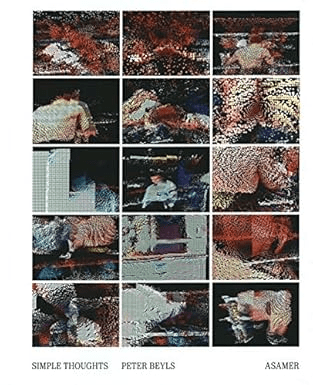
Peter Beyls is a Belgian pioneering interdisciplinary artist who has been exploring computer programming for nearly four decades. His work extends into the visual arts, music and hybrid experimental formats.
In light of the publication of a monograph by MER Paperkunsthalle, iMAL organises the first major survey exhibition of Peter Beyls in Belgium featuring a significant selection of works from 1974 until today.
A comprehensive selection of machine drawings is shown reflecting the wide range of algorithmic approaches explored by the artist. Initial experiments focus on uncertainty and conditional randomness, typically organised as grid structures. Further grid-based work employs cellular automata; a kind of virtual machines growing complexity from simple beginnings. Inspired on Chomsky’s writings, much work explores linguistic principles. At some point, abstract generative thinking gave way to the notion on ‘creative intelligence’ – the delegation of aspects of human creativity to machines. This work is based on principles of the discipline of artificial intelligence.
A major transition gradually evolved starting in the late 1980’s; a conceptual swing from knowledge-based systems to self-organisation. The latter approach is characterized as speculative, simple components interact locally to give rise to emergent overall complexity. Since the genesis of intricate structures is captured in a series of drawings, the notion of time is implicit.
The exhibition will thus provide an overview of the various computational paradigms implemented by the artist. In addition, a wide range of media and presentation formats are employed such as over 70 machine drawings and unique photographic prints. Four audiovisual installations provide a dynamic interface between the onlooker and the virtual world inside the computer or the data of Internet. Robot drawings produced in 2014 will receive their first public presentation.
The show is organised in the context of a monograph documenting the artist’s extended oeuvre, published by MER (www.merpaperkunsthalle.org). Six international scholars (Sahra Kunz, Frieder Nake, Luc Steels, Helena De Preester, Grant Taylor and Joel Chadabe) contributed a chapter, aiming to create a critical framework from their respective, private intellectual perspective.
The Monograph (English) will be on sales at iMAL during the whole exhibition.
See https://legacy.imal.org/en/exhibition/peter-beyls-retrospective
More on Peter Beyls: https://www.peterbeyls.net/
- Keywords: Peter Beyls, computer art, robot drawings, computer programming, cellular automata, self-organisation
Details
Source: pp. 161-185 in Simple Thoughts – Peter Beyls (ed. P. Beyls). Gent: Asamer
Author(s): Helena De Preester
Year of publication: 2014
Sensitivity to Differences in the Motor Origin of Drawings: From Human to Robot
Abstract
This study explores the idea that an observer is sensitive to differences in the static traces of drawings that are due to differences in motor origin. In particular, our aim was to test if an observer is able to discriminate between drawings made by a robot and by a human in the case where the drawings contain salient kinematic cues for discrimination and in the case where the drawings only contain more subtle kinematic cues. We hypothesized that participants would be able to correctly attribute the drawing to a human or a robot origin when salient kinematic cues are present. In addition, our study shows that observers are also able to detect the producer behind the drawings in the absence of these salient kinematic cues. The design was such that in the absence of salient kinematic cues, the drawings are visually very similar, i.e. only differing in subtle kinematic differences. Observers thus had to rely on these subtle kinematic differences in the line trajectories between drawings. However, not only motor origin (human versus robot) but also motor style (natural versus mechanic) plays a role in attributing a drawing to the correct producer, because participants scored less high when the human hand draws in a relatively mechanical way. Overall, this study suggests that observers are sensitive to subtle kinematic differences between visually similar marks in drawings that have a different motor origin. We offer some possible interpretations inspired by the idea of “motor resonance”.
- Keywords: drawing, human hand, robot drawing, kinematics, gesture, motor, motor resonance, movement, static traces
- Open access
Details
Source: PLoS ONE 9(7): e102318. https://doi.org/10.1371/journal.pone.0102318
Author(s): Helena De Preester, Manos Tsakiris
Year of publication: 2014
Living Lines: Can We Discriminate Between Traces of Movement by Animate and Non-Animate Agents?
Abstract
This chapter examines the viewer’s sensitivity to the movements behind a drawn image. The images discussed are made by two different kinds of agents: animate and non-animate, and we examine if and how the viewer is able to discriminate the producer behind the drawings. We first present a number of recent theoretical insights and empirical results as to how observers perceive movements produced by animate and non- animate agents, and how they are able to correctly attribute drawn lines to the agent that produced it. We next present the results of a pilot study that suggests that participants are indeed able to discriminate between similar-looking drawings produced by humans and by a robot. The notion of motor resonance guides our explanation.
- Keywords: drawing, human hand, robot drawing, mirror neurons, gesture, motor, motor resonance, movement, static traces
Details
Source: Images of Animate Movement. Representations of Life/Bilder animierter Bewegung. Darstellungen von Leben, pp. 181-196.
Author(s): Helena De Preester, Manos Tsakiris
Editors: S. Leyssen, P. Rathgeber
Publisher: München: Wilhelm Fink Verlag
Year of publication: 2013
Equipment and Existential Spatiality: Heidegger, Cognitive Science and the Prosthetic Subject
Abstract
This chapter examines the relation between the body and technics. The term ‘technics’ is preferred over the term ‘technology’ for a number of reasons. First, Heidegger, in The Question Concerning Technology (1977, first published in 1962 as Die Frage nach der Technik) does not use the word ‘technology’ (Technologie) but he consistently applies the word ‘technics’ (Technik). Another reason is found in Don Ihde’s introduction to his Existential Technics (1983), where Ihde prefers the word ‘technics’ ‘because it conjures up a sense of action and artifact which I believe important for a focal understanding of technology. Technics stands in between the too abstract “technique” which can refer to any set action with or without a material object, and the sometimes too narrow sense of technology as a collection of tools or machinery.’ (Ihde, 1983, p. 1). ‘Technics’ points to the use of artifacts in action, and in this sense it plays an important role in the present chapter, in which the following questions are dealt with. What is the precise relation between a human being and the object or the artifact she or he is using to act with? What is the meaning of this peculiar relation, and how is this relation possible?
- Keywords: Heidegger, equipment, readiness-to-hand, tools, Dasein’s spatiality, body extension, prosthesis
Details
Source: pp. 276-308 in Heidegger and Cognitive Science (Eds. Kiverstein, J., Wheeler, M.). New York: Palgrave McMillan.
Author(s): Helena De Preester
Year of publication: 2012
Het technologische lichaam als utopie
Abstract
Veel filosofen buigen zich tegenwoordig over het hybride thema van de technologische mens. Lichaam en technologie zijn legitieme onderwerpen geworden binnen een traditie die zich althans volgens haar officiële geschiedenis aan geen van beide veel gelegen liet liggen. Bovendien bevredigt deze gecombineerde thematiek een zucht naar actualiteit en maatschappelijke verantwoording van een discipline die vaak het verwijt krijgt van al te wereldvreemde abstractie en maatschappelijke irrelevantie. Wat in de filosofie contemporain is, en dus aan de orde, valt echter niet zo gemakkelijk vast te stellen. Niet alles wat het aura van het hedendaagse draagt, is ook werkelijk actueel en dus aan de orde. De vraag in deze bijdrage is of het brandend actuele thema van de verhouding tussen mens en technologie niet vaak onopgemerkt ingesleten paden volgt. Is ons basisrecept voor het denken van de technologische mens geen recept dat we vooral uit gewoonte en dus haast blindelings
volgen? Als we deze vraag op tafel leggen en het schema dat we hanteren ondervragen, vinden we misschien ook een verklaring waarom het technologische lichaam zo snel leidt tot utopieën en dystopieën. De cyborg en zijn verwanten brengen ons immers opmerkelijk snel, schijnbaar moeiteloos en onvermijdelijk tot visioenen over een toekomst verscheurd tussen rampspoed en heil.
- Keywords: lichaam, technologie, Foucault, Freud, Agamben, Stiegler, cyberpunk, utopie, dystopie, posthumanisme, transhumanisme
Details
Source: Algemeen Nederlands Tijdschrift voor Wijsbegeerte, 104(3), 222-236
Author(s): Helena De Preester
Year of publication: 2012
Technology and the myth of ‘natural man’: a response to Don Ihde and Charles Lenay
Abstract
The main suggestions and objections raised by Don Ihde and Charles Lenay to my ‘Technology and the body: the (im)possibilities of re-embodiment’ are summarized and discussed. On the one hand, I agree that we should pay more attention to whole body experience and to further resisting Cartesian assumptions in the field of cognitive neuroscience and philosophy of cognition. On the other hand, I explain that my account in no way presupposes the myth of ‘natural man’ or of a natural, delineated body from before the fall into technology.
- Keywords: embodiment, extension, incorporation, technology, Don Ihde, Bernard Stiegler
Details
Source: Foundations of Science 17(4), pp. 385-390 https://doi.org/10.1007/s10699-011-9246-7
Author(s): Helena De Preester
Year of publication: 2012
Technology and the Body: the (Im)Possibilities of Re-Embodiment
Abstract
This article argues for a more rigorous distinction between body extensions on the one hand and incorporation of non-bodily objects into the body on the other hand. Real re-embodiment would be a matter of taking things (most often technologies) into the body, i.e. of incorporation of non-bodily items into the body. This, however, is a difficult process often limited by a number of conditions of possibility that are absent in the case of ‘mere’ body extensions. Three categories are discussed: limb extensions/prostheses, perceptual extensions/prostheses and cognitive extensions/prostheses. For each category, a distinction between extensions and incorporations is proposed, and the conditions of possibility for real incorporation are discussed. These conditions of possibility differ in each category, but in general they ask for radical or fundamental alterations not only in the motor and/or sensory or cognitive constitution of a human subject, but also in his or her subjective experience.
- Keywords: bodily extension; cognitive extension, prostheses, re-embodiment
Details
Source: Foundations of Science, 16(2), pp. 119-137
https://doi.org/10.1007/s10699-010-9188-5
Author(s): Helena De Preester, with commentaries by Don Ihde and Charles Lenay
Year of publication: 2011
Lichamelijke integriteit: lichaamsmodel, lichaamsbeeld en identificatie
Abstract
Deze bijdrage focust op lichamelijke integriteit, in de zin van de subjectieve, lichamelijke ervaring van volledigheid. Ons fysische lichaam, dat door verwonding of ziekte kan worden gemutileerd/beschadigd, kan in een aantal gevallen worden gerepareerd of opnieuw ‘vervolledigd’ door prothesen of door transplantatie van een lichaamsdeel. In onze tijd van zowel cyborgfantasieën als daadwerkelijke manipulaties van het lichaam, kan een opheldering en een verkenning van de grenzen van de plasticiteit van onze lichamelijke integriteit nuttig zijn. Eerst maken we een zo helder mogelijk onderscheid tussen lichamelijke extensies enerzijds (bijvoorbeeld in het geval van het gebruik van instrumenten) en incorporatie van lichaamsvreemde entiteiten anderzijds (bijvoorbeeld in het geval van prothesen). Dit leidt tot de hypothese van een lichaamsmodel dat op normatieve wijze beperkingen oplegt aan wat al dan niet in het lichaam kan worden geïncorporeerd. Daarna gaan we in op de kwestie van re-identificatie met het eigen veranderde lichaam. Het herstel van iemands ervaring van lichamelijke volledigheid vereist immers een proces van re-identificatie met het eigen lichaam. Om dit proces te beschrijven zullen we gebruik maken van de psychoanalytische analyse van het spiegelstadium en de fenomenologische beschrijving van Leib (lijf) en Körper (fysisch lichaam). De twee pistes van lichaamsmodel en re-identificatie worden hierbij getest op verklaringskracht en hun eventuele compatibiliteit.
- Keywords: bodily integrity; bodily extension; incorporation; body model; body image; re-identification with changed body; BIID; phenomenology; mirror stage
Details
Source: pp. 189-214 in Psychoanalyse en neurowetenschap: de geest in de machine.
Author(s): Helena De Preester, Jenny Slatman
Editor(s): M. Kinet, A. Bazan
Publisher: Antwerpen/Apeldoorn: Garant Uitgevers
Year of publication: 2010
 Contemporary Emotions in Art, Technology and Politics